
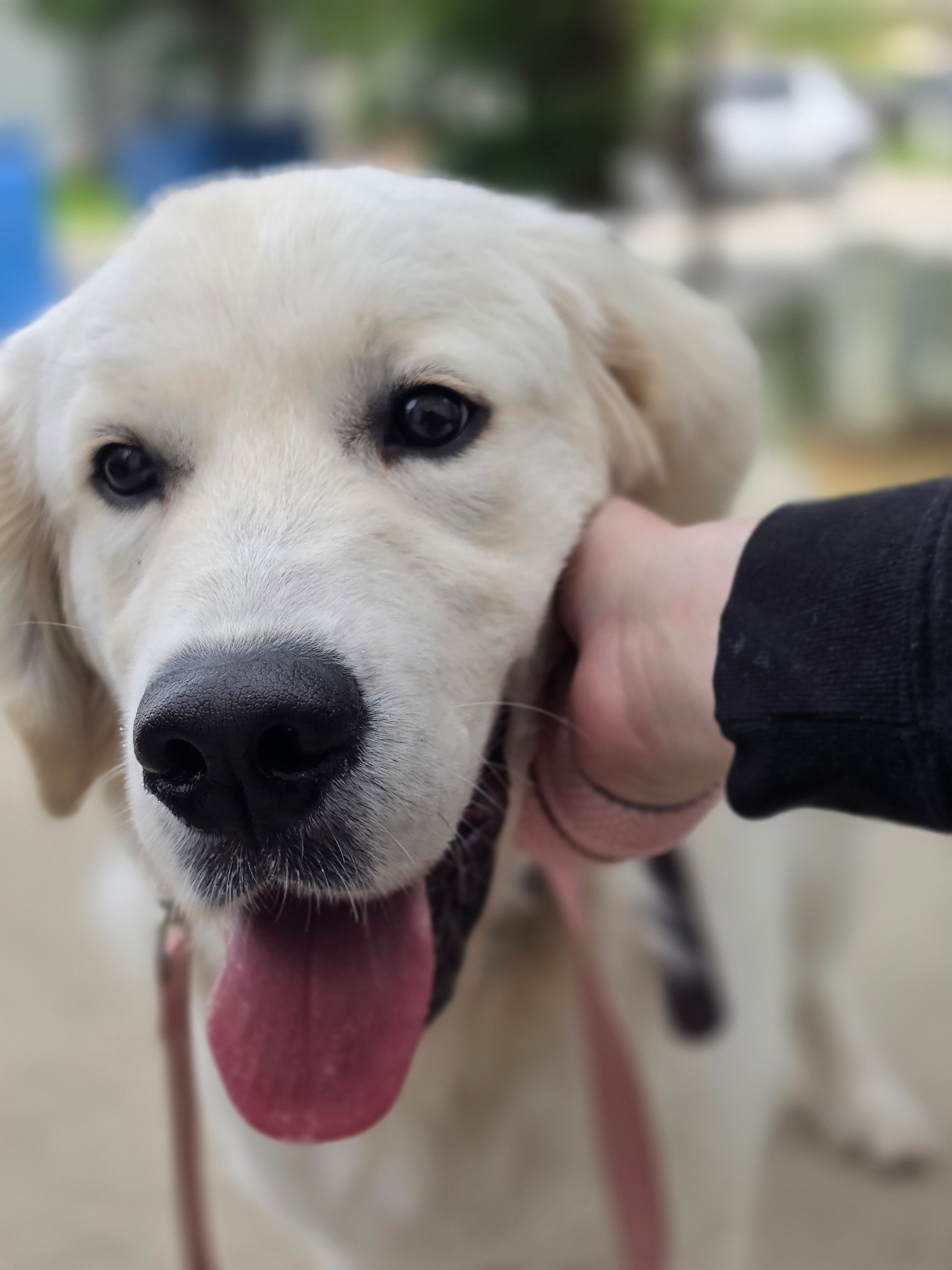
You pictured the easy version. Soft eyes, a loyal shadow, that gentle golden temperament everyone talks about, and morning walks that feel like a shared ritual. Then your puppy grabbed the leash in their mouth, planted themselves on the sidewalk, and refused to move — or took off down the block, towing you behind them. Either way, take a breath. You haven't done anything wrong, and your puppy isn't being stubborn.
At Ivory & Pine Goldens, we believe how you teach matters as much as what you teach. So this is the whole picture — from the very first time your puppy wears a leash through the calm, loose-leash walks you're hoping for — using kind, reward-based methods from start to finish. No yanking, no prong collars, no battles of will. Just a plan you can actually enjoy following.
The MindsetIt was never really about the leash
Here's the reframe that changes everything: pulling isn't bad behavior, and freezing isn't defiance. Both are completely natural. The world is full of smells and squirrels and interesting people, and a young dog wants to reach all of it at once. A nervous puppy, meanwhile, simply hasn't learned yet that the leash is safe. Neither one has figured out the thing we're about to teach — that staying near you is the best deal going.
That's the entire secret, and it's worth saying plainly: we want being close to you to feel like the best thing happening, so your dog chooses it. Everything below is just a different way of teaching that one idea. Which is why leash training isn't a battle of wills at all. It's the foundation of a relationship.
The FoundationStart before you leave the driveway
The most common mistake well-meaning families make is saving "training" for the walk itself — when the puppy is already overstimulated and straining toward the park. Build the foundation somewhere boring instead: your living room, the hallway, the backyard.
Clip on the leash and let it just exist. For a puppy who has never worn one, the first lesson is simply that the leash isn't a toy and that staying near you is a good idea. Take a step. The instant your puppy is near your side, mark it with a warm "yes!" and reward with a tiny treat or a bit of play. You're teaching one simple thing: good things happen when I'm next to you.
A few things that make those first outings go smoothly:
- Give them room to explore. A long line or a longer leash lets a young puppy investigate safely while you keep them close. Confidence grows when they get to sniff and wander a little.
- Handle leash-biting calmly. A matter-of-fact "uh-uh" — never loud or angry — then redirect to a toy and reward the moment they let go. You may repeat this a dozen times on the first walk. That's completely normal.
- Never drag a hesitant puppy. If yours freezes or wants to sit, let them. Stand still, lure them forward with a treat, and let them choose to move in their own time. Forcing it only teaches that the leash means stress.
- Keep sessions short and cheerful. Five minutes is plenty for a young Golden. Always stop while they're still having fun.
At this stage, the leash isn't about perfect heeling. It's a safety tool and a gentle way to start building attention — the thing everything else rests on.
Use a well-fitted flat collar or a harness — a front-clip harness gives you a little extra help on tougher days without any discomfort. We don't recommend prong, choke, or shock collars; they're unnecessary, and they work against the trust you're building. Keep your training treats tiny and exciting, too — you'll hand out a lot of them early on. Here's how we reward without overdoing it.
The Core SkillThe one skill worth more than the rest
Before commands, before tricks, before anything else, there's a single skill that matters more than all the others combined: getting your puppy to look at you.
Trainers call it engagement, and the goal is simple — you want your puppy to believe that checking in with you is the most interesting, rewarding thing they can do. Every time your young puppy glances up at you, mark it the instant it happens with a click or a cheerful "yes," then praise and offer a small treat. At eight weeks, reward that eye contact every single time.
Catch the voluntary check-ins, too — those little moments when your dog looks up at you for no reason at all. A soft "good dog," a treat, a scratch behind the ears. A dog who checks in naturally is a dog who's tuned in to you, and a tuned-in dog rarely hits the end of the leash to begin with.
One gentle exception: if you've got a clingy, velcro puppy who never leaves your side, hold off on rewarding eye contact for now. That pup needs encouragement to explore and build a little independence first. You can teach engagement later, once their confidence has grown.
Teach the check-in first.
If you only ever work on one thing, work on this: make looking at you pay. A puppy who voluntarily offers attention is a puppy you can teach anything — recall, loose-leash walking, manners, all of it. Engagement is the root. Everything else is a branch.
The TechniqueWhen the leash goes tight, be a tree
Once your puppy is confident and ready for real walks, you'll meet the classic challenge: the pull. Here's the gentlest, most reliable way to handle it.
The moment the leash goes taut, simply stop. Become a tree — boring, rooted, going nowhere. Don't yank. Don't scold. Just wait. Almost every dog will eventually glance back or ease off the leash to see what's going on. The instant they do, say "yes!" and start moving again. Forward motion becomes the reward for a loose leash.
It feels slow at first — genuinely tedious for a week or two, and we won't pretend otherwise. But what you're building is a dog who understands that pulling stops the fun and a slack leash keeps it going. That lesson lasts a lifetime, and it's built entirely on trust rather than discomfort.
Body & BrainA tired body isn't a calm mind
Here's something most new families don't expect: you can't simply exercise a puppy into good behavior. A short walk twice a day gives your puppy the movement they need — roughly fifteen minutes for an eight-week-old, building to twenty minutes around three months and thirty by six months. But physical exercise alone can backfire. The fitter a puppy gets, the more exercise they need to feel tired, and you end up chasing a moving target.
The missing ingredient is mental work. When you fold short bursts of thinking and learning into your walks, your puppy comes home ready to rest and a little more bonded, a little more obedient, a little braver in new places. That's the combination that turns a wound-up puppy into the settled companion you were hoping for.
So think of every walk as a tiny training session wrapped inside a stroll around the block.
| Puppy age | Walk length (twice daily) | What to focus on | Skills to add |
|---|---|---|---|
| 8 weeks | ~15 minutes | The leash isn't a toy; staying near you is a good idea | Eye contact, following a lure, calm leash-bite redirects |
| 3 months | ~20 minutes | Loose-leash basics and a happy recall | "Be a tree," coming when called, "drop it" |
| 6 months | ~30 minutes | Holding focus in busier places | Gentle retrieve, attention around real distractions |
The ToolkitSmall skills that make every walk easier
As your puppy grows more comfortable, fold these in a little at a time — just one or two new skills per day or per week, depending on how they're doing.
- Following a lure. Hold a treat out and let your puppy follow it — in circles both ways, into a sit, into a down, around obstacles and past garbage cans and unfamiliar people. A little mild novelty builds confidence.
- Coming when called. Say their name, give a light tug, and the moment they turn toward you, mark it — then back away as they come. Moving backward triggers their natural drive to follow; moving toward them makes them want to turn away. Reward big when they reach you.
- "Drop it." When they pick up something they shouldn't, trade it for a treat or toy, then mark and reward the drop. On walks with lots of tempting debris, hand them a stick to carry so they're less likely to grab the wrong thing.
- A gentle retrieve. Toss a toy just a few feet and reward them simply for bringing it back — you don't even need to take it yet. Keep throws short; long, hard sprints and twists aren't good for developing joints.
- Focus around distractions. Once the basics feel solid at home, visit somewhere busier and mix in play, treats, and short training bursts, so new places come to mean fun with you instead of fear.
These pair naturally with the foundation commands like sit, down, and stay you're building at home — together, they're the toolkit behind a calm, easy adult dog.
As long as your puppy is still happily taking treats, you haven't pushed too far. If they're suddenly too nervous to eat, back up and go slower. Training too slowly is always better than overwhelming them — there's no prize for rushing.
Good To KnowCommon questions about leash training
When can I start leash training my puppy?
You can start the day your puppy comes home, around eight weeks — just indoors at first. Clip the leash on in a quiet room, reward your puppy for staying near you, and keep it to about five cheerful minutes. Outdoor walks build gradually from there.
How long does it take to leash train a Golden Retriever?
The foundations come together in a few weeks, but reliable loose-leash walking develops over several months as your puppy matures. Consistency matters far more than speed — a few short, happy sessions a week will get you there.
Should I use a harness or a collar for a Golden puppy?
A well-fitted flat collar or a front-clip harness both work well, with the front-clip harness giving you a little extra help on tougher days. We don't recommend prong, choke, or shock collars — they're unnecessary, and they undermine the trust you're building.
Why does my puppy bite the leash or refuse to walk?
Both are normal puppy behavior, not stubbornness. For leash-biting, calmly redirect to a toy and reward the moment they let go; for a puppy who freezes, never drag them — stand still and lure them forward with a treat until they choose to move on their own.
How do I stop my Golden from pulling on the leash?
Use the "be a tree" method: the instant the leash goes tight, stop and wait. When your dog eases the tension or glances back at you, say "yes" and start moving again — so a loose leash becomes the thing that earns the walk. It feels slow for a week or two, then it clicks.
If there's one principle to carry through all of it, it's this: there should always be far more praise than correction, far more "yes" than "no." Walks should feel like a good time you share, not a test your dog is trying to pass. And please — not every walk has to be a training session. Some are just for sniffing and wandering and enjoying the day together, and those matter too. The skills from your short, focused practice will carry over into those easy strolls on their own.
Because loose-leash walking was never really about the leash. It's about your Golden learning to look to you, move with you, and trust that staying close is always worth it.
Dreaming of a Golden of your own?
At Ivory & Pine Goldens, our English Cream Golden Retriever puppies are raised right in our home — held, socialized, and gently introduced to the world from their very first weeks — so the groundwork for confidence is already underway before they ever come home to you. Our puppies come from OFA health-tested, AKC-registered parents, and we keep a waitlist for families hoping to bring one home. Spots are limited, and they fill quickly.
Join the waitlistEverything here is reward-based and force-free — the approach the veterinary behavior community recommends, and the one we use with every litter. It protects the trust between you and your dog while teaching faster than any aversive tool ever could.
This article reflects our experience raising and training English Cream Goldens and is general guidance, not a substitute for individualized advice from your veterinarian or a qualified trainer.
%20(1).jpg?width=1082&height=866&name=20260609_162027(0)%20(1).jpg)
.webp?width=1920&height=1047&name=golden-1128-P5-2%20(1).webp)