
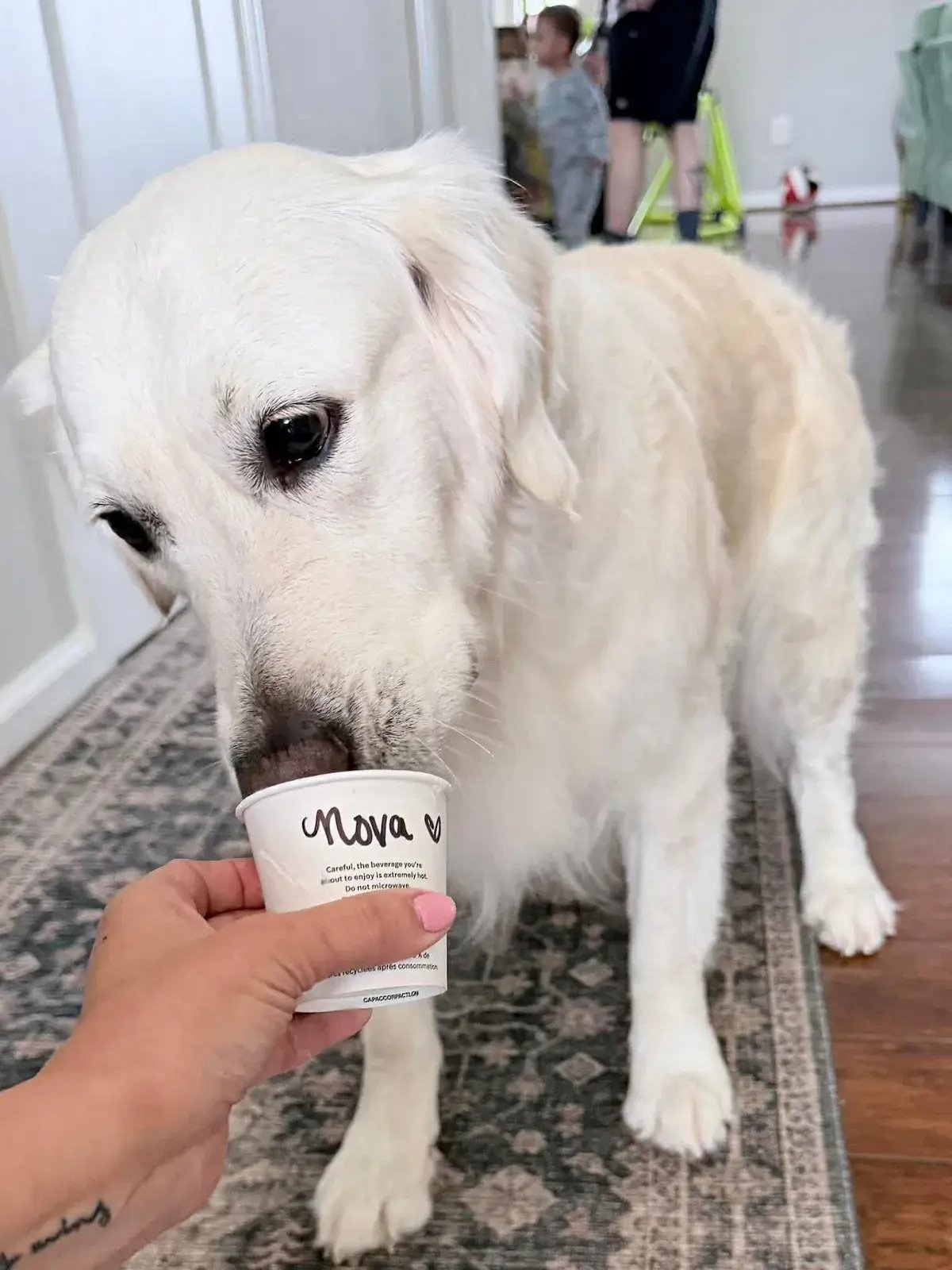
We're a small, family-run program, and we raise every litter with reward-based, force-free training from week one. By the time a puppy joins your family, treats have already become a language they understand. Our job is to hand that language off to you — so here's exactly how we think about treating, what the latest veterinary guidance says, and how to keep all that rewarding from working against your puppy's growing body.
The Foundation
The 90/10 rule, and why it matters more for a Golden
Veterinarians have a simple guideline for treats: they should make up no more than about 10% of your dog's daily calories. The other 90% comes from a complete, balanced food that's actually formulated to meet your puppy's nutritional needs. Treats are wonderful, but most aren't built to nourish — so the proportion stays small.
90% balanced food. 10% treats.
If your puppy eats 800 calories a day, roughly 80 of those can come from rewards. Many trainers aim closer to 5% to leave a comfortable margin. Your vet can tell you your puppy's exact daily target — it shifts with age, weight, and activity.
For a large breed like a Golden Retriever, this isn't just about waistlines. Overfeeding a Golden puppy makes them grow too fast, and rapid, uneven growth puts real stress on developing joints. Excess weight and overfeeding during puppyhood are well-documented risk factors for hip and elbow dysplasia. A lean, slow-and-steady puppy is a healthier adult — which is the whole point.
You should be able to feel your puppy's ribs easily without seeing them, and notice a tuck behind the rib cage. A lanky, "always a little hungry" Golden puppy is usually a well-fed one. Chubby is not the goal.
Our Approach
The best training treat is already in the bag
Here's the trick that lets us reward constantly without ever tipping past that 10%: we treat with the puppy's own food. First thing each morning, we measure out the day's ration and pull a portion of it into a treat pouch. The rest goes toward regular meals. That kibble becomes the currency for the whole day.
Four or five pieces is a reward. We use them generously and on purpose:
- Every potty success — the fastest way to a house-trained puppy is rewarding the right spot, every single time.
- Every recall — come when called, get paid. A puppy who's been richly rewarded for coming keeps coming for life.
- Four paws on the floor — reward sitting for attention instead of jumping, and the jumping fades on its own.
- Crate time — toss a few pieces in every several minutes early on, and the crate becomes a happy place rather than a battle.
Because it's just their regular food, you can reward this often and never unbalance their diet or pack on weight. It's the single habit that does the most to shape a polite, confident dog.
Everything we do is reward-based and force-free. We don't use prong collars, shock, or any aversive tools — and we'd gently steer you away from them too. Rewarding the behavior you want is more effective, it protects the trust between you and your dog, and it's what the veterinary behavior community recommends.
Leveling Up
When to reach for something higher-value
Sometimes kibble isn't quite enough — a distracting park, a brand-new skill, a nervous moment that needs a little extra magic. That's when we bring out the high-value rewards.
Plain boiled chicken
This is our go-to. Real chicken still has its moisture, so it isn't as calorie-dense as dry treats — meaning a smaller piece feels like a bigger win. We boil a pack of breasts, cut them into tiny pea-sized bits, and freeze them in small containers so a portion is always ready. Healthy, irresistible, and easy on the calorie budget.
Store-bought training treats
For trips where fresh chicken would spoil, a good soft, low-calorie training treat earns its place. Look for something small, soft (so it doesn't crumble and distract indoors), and light on calories. Zuke's Mini Naturals remain a trainer favorite — pea-sized, real-meat first ingredient, and only about 2 calories each, which makes the math forgiving during a heavy training day.
It's the number of rewards that teaches, not the size of each one. A treat the size of a pea earns the same wag as a big biscuit — and lets you reward ten times as often before you hit your 10%. Break larger treats into tiny pieces.
The Long Game
Keep the payoff a little unpredictable
Once a puppy reliably knows a behavior, you don't have to reward every single time forever. The most dependable dogs work for random rewards — they keep offering good behavior because the next payoff might be coming. That hopeful, "maybe this time" energy is what carries good manners through to adulthood, even when your hands are empty.
And if you ever hear that your puppy is "picky" or "doesn't like treats," look first at the food bowl. Picky eating is very often a sign of overfeeding — a puppy who's getting too much at meals simply isn't hungry enough to work. Trim the meals a touch (with your vet's blessing), and watch their enthusiasm come roaring back.
Bringing home a puppy this year?
Our focus is on quality over quantity, which is why we only raise a select number of English Cream Golden Retriever litters each year. Every puppy comes from health-tested, AKC-registered parents and is raised inside our home. We believe in transparent, consistent pricing across all coat shades. If you are ready to bring home the quintessential calm, comforting companion, we invite you to join our current waitlist.
See our upcoming litterVCA Animal Hospitals — guidance on the 10% rule for treats and daily calorie balance.The Farmer's Dog & Pumpkin Pet Insurance — current explanations of the veterinary 10% treat rule (2025–2026).
Dogster, Caninejournal, and veterinary clinic resources — overfeeding, rapid growth, and hip dysplasia risk in Golden Retriever puppies (2026).
This article is general guidance from our experience as breeders, not a substitute for veterinary advice. Always confirm your puppy's specific calorie needs and feeding plan with your veterinarian.
%20(1).jpg?width=1082&height=866&name=20260609_162027(0)%20(1).jpg)
.webp?width=1920&height=1047&name=golden-1128-P5-2%20(1).webp)