
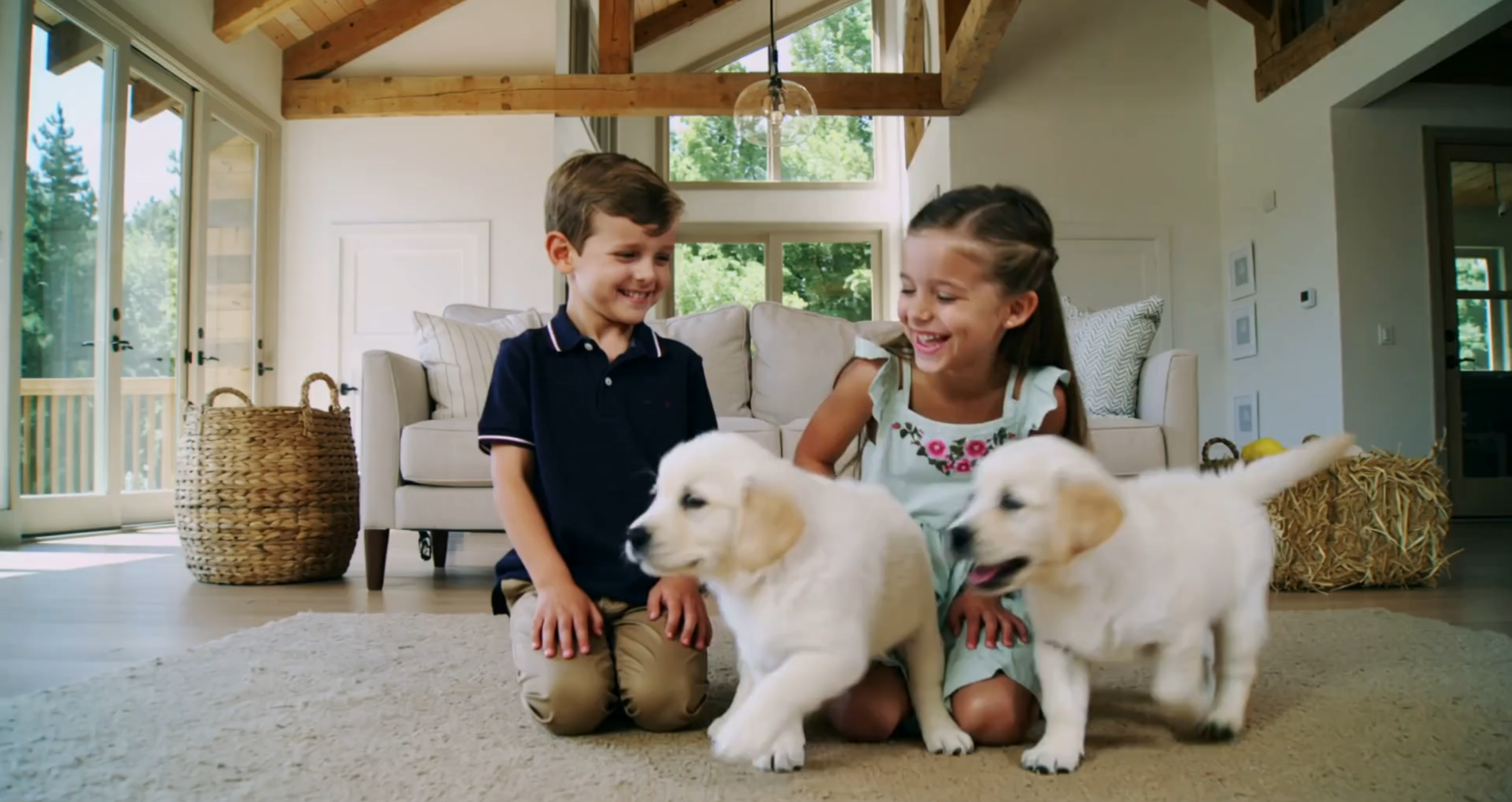
The short answer is an easy yes — Golden Retrievers are one of the most beloved family dogs in the world, and English Cream Goldens are no exception. But the honest answer is a little more interesting: a wonderful family dog isn't guaranteed by a breed name or a coat color. It's made — by the right lines and the right start.
So here's what actually shapes the gentle, kid-loving companion families picture, how a good breeder builds it on purpose, and what to realistically expect day to day. (For the bigger picture on the breed, see our full guide to English Cream Golden Retrievers.)
The TemperamentGentle, affectionate, and eager to please
Ask anyone why Goldens top the family-dog lists and you'll hear the same words: gentle, patient, affectionate, eager to please. They're people-dogs to their core — happiest underfoot, soft-mouthed and tolerant, quick to learn because they genuinely want to make you happy. That sweet, biddable disposition is the breed's signature, and it's exactly what makes a Golden such a natural fit for a busy household with children.
Gentle, patient, eager to please
People-focused, soft-mouthed, and quick to learn because they want to be with you — the disposition that lands Goldens at the top of family-dog lists, year after year.
Where It Comes FromLines and raising — not coat color
Here's the part the marketing tends to skip: temperament comes from two things — genetics and how a puppy is raised — and coat color isn't one of them. A cream coat doesn't make a calmer or sweeter dog. (We dig into that myth in English Cream vs. American Golden Retriever.) The steady, gentle adult you're picturing comes from parents with proven, stable temperaments, paired thoughtfully — and from a puppy's earliest weeks of life. Not from how light its fur is.
That's why the breeder matters far more than the color. When you choose a breeder, you're really choosing the lines and the upbringing behind your dog.
Be a little skeptical of "calmer because cream" or "sweeter because English." Temperament is set by genetics and early experience. If a breeder leads with coat color instead of the parents' temperaments and health, that tells you what they're prioritizing.
Day to DayWith kids, other pets, and how much energy to expect
With children, Goldens are about as good as it gets — patient, gentle, and forgiving of the happy chaos that comes with little ones. That said, a great relationship still goes both ways: young kids and puppies both need supervision and gentle coaching while everyone learns the rules. They're typically wonderful with other dogs and cats, too, especially when introductions happen early and positively.
One honest caveat: Goldens are not couch potatoes. They're a moderate-to-high-energy sporting breed, and they need real daily activity to be the calm companion indoors that everyone wants. A bored Golden finds its own hobbies — usually involving your shoes.
- Supervise early interactions between kids and puppy, and teach both sides gentle manners.
- Give the puppy a calm retreat — a crate or pen where they can rest undisturbed.
- Introduce other pets slowly and positively, with good things happening on both sides.
- Meet their energy daily with walks, play, training, and mental enrichment — and go easy on a growing puppy's joints, where short, frequent play beats long, hard sessions.
Raised With IntentionHow a great temperament is actually built
Temperament isn't only inherited — much of it is built in the first weeks of life, during the windows when a puppy's brain is most open to the world. That early work is what we care about most, and it's the difference between a puppy with good genes and a confident family dog ready to thrive in your home.
- Early neurological stimulation — gentle, structured handling in the first days that helps build stress resilience and confidence.
- Socialization from week one — new sounds, surfaces, textures, and people introduced slowly and positively during the critical window, so the world feels safe rather than scary.
- Raised in our home — underfoot, around everyday noise, children, and routine, so ordinary family life is normal long before pickup day.
- Force-free foundations — the first reward-based lessons in coming when called, settling calmly, and trusting their people.
This is what we mean by raised with intention — and it's exactly why a thoughtful breeder's first eight weeks matter so much.
Much of it happens before eight weeks
Early stimulation and socialization during the critical window shape a confident, steady adult — which is why a breeder's first weeks matter far more than the shade of a coat.
When you're comparing breeders, ask what they actually do in those first weeks — how puppies are socialized, where they're raised, who they meet. It tells you more about your future dog's temperament than almost any other question.
Meet the temperament for yourself
The best predictor of a puppy's nature is its parents. Come meet the health- and temperament-tested dogs behind our litters — and see exactly where that gentle, family-first disposition comes from.
Meet our dogsGolden Retriever Club of America & AKC breed standard — temperament described as friendly, reliable, and trustworthy; coat color is not tied to temperament.
Early Neurological Stimulation (Bio Sensor program) and canine socialization research — the role of early handling and the critical socialization window in shaping adult behavior.
This is general guidance from our experience as breeders. Every dog is an individual, and temperament reflects both genetics and environment — there are no guarantees. Meeting a breeder's adult dogs in person is the best window into what their puppies are likely to be.
%20(1).jpg?width=1082&height=866&name=20260609_162027(0)%20(1).jpg)
.webp?width=1920&height=1047&name=golden-1128-P5-2%20(1).webp)